

The book did not start as a book.
One of us was in the middle of a brutal personal stretch. The kind where the ground moves and you start auditing everything behind you. What did we actually get for that many years of work? Two companies built and sold, with nine kids between us. It should have felt like more.
So one of us started writing. Not chapters. Just what happened, in the order it happened.
Then it would go to the other one. We would laugh at it, or cry over it, or get furious all over again at whoever had it coming in that particular chapter. Then the second pass would go at making it hit harder.
That ran for months before either of us said the word “book” out loud. It was not a content strategy. It was two people needing to see twenty-four years written down in an order that made sense.
The unglamorous middle
Then it became a book, and a book comes with a production calendar you do not control. Word counts, legal review, quote approvals, and a lot of second-guessing. Two different editors. Chapters picked up and set down somewhere else in the manuscript.
Eighteen rounds of edits. Eighteen. Somewhere past round fifteen the changes stopped making the book better and started only making it different, and Victoria called it. Pens down. Stop touching it. She was right but Beth did not feel that at the time.
We cut stories we loved. Several of the best ones came from large clients, and no amount of scrubbing the details was going to stop a reader from working out exactly who we were describing. (And our contracts with them had tight confidentiality clauses, so this was a real no go.)
We disagreed about who the book was for. One of us wanted it pointed squarely at women already running something and nobody else. The other kept saying there was a version of every one of these lessons that a woman sitting inside a corporation needs to hear. That argument ran for a long time. The wider door won, and the book is better for it.
Then there was the cover. Victoria fought tooth and nail to get the two of us and all nine kids on the front, and paid a professional photographer out of her own pocket to make it possible. That bill was not small. When the book arrives, look at where we landed. The back cover. (Without Victoria’s ferociousness, we wouldn’t have gotten that either.)
That is publishing. You get a vote. You do not get the deciding vote. Worth knowing before you sign anything, in any industry.
Three things writing it taught us about running a company
1. Somebody has to write the ugly version first.
We never sat down to draft together. Not once. A blank page and two opinions produces nothing. Whoever had the story wrote a bad version and handed it over. The other one made it land.
That is a rule we ran the company on for years without naming it. The fastest route to a good decision is a bad draft of it sitting on the table. A rough pricing model beats a meeting about pricing. A rough deck beats a discussion about what belongs in the deck. Chapter 7 is Start Before You Are Ready. This is what that looks like on a Tuesday.
The other half of that skill is knowing when to stop. Eighteen rounds in, somebody has to say pens down. Starting ugly and stopping on time are the same instinct pointed in opposite directions.
2. Split by strength, not by fairness.
We did not divide the chapters evenly. One of us opens, one of us sharpens. Neither of us is any good at the other one’s half.
Most partnerships split the work down the middle because even feels fair. Then both people spend part of every week on the task they are worst at, and both of them quietly resent it. Fair and effective are two different tests. Name the role, not the percentage.
3. The deadline has to come from outside the building.
We thought we finished the book a million times before we actually did. It was finally done when a the publisher put dates on a calendar and we publicly committed to our launch date.
If you have an internal project that has been sliding for a year, it does not need more discipline. It needs an outside party with a date and an opinion. A client. A publisher. A conference organizer who has already printed your name in the program. Manufacture the external deadline and you stop having to win the argument with yourself every morning.
The lesson shows up late
The part that surprised us: we are better at explaining the last twenty-four years now than we were while we were living them.
Distance did that. In year ten we could not have written this book. We were too close, too tired, and too invested in being right about decisions we had already made. The pattern only shows up after you stop running.
So if you are in the middle of the mess and cannot name what you are learning from it, you are not slow. You are too close. Write it down badly anyway. The order comes later.
And take the victory lap. We waited twenty-four years for ours and did not know we needed one until we were in it. You do not have to sell a company to earn it. A finished year counts. Keeping the doors open through a bad quarter counts.
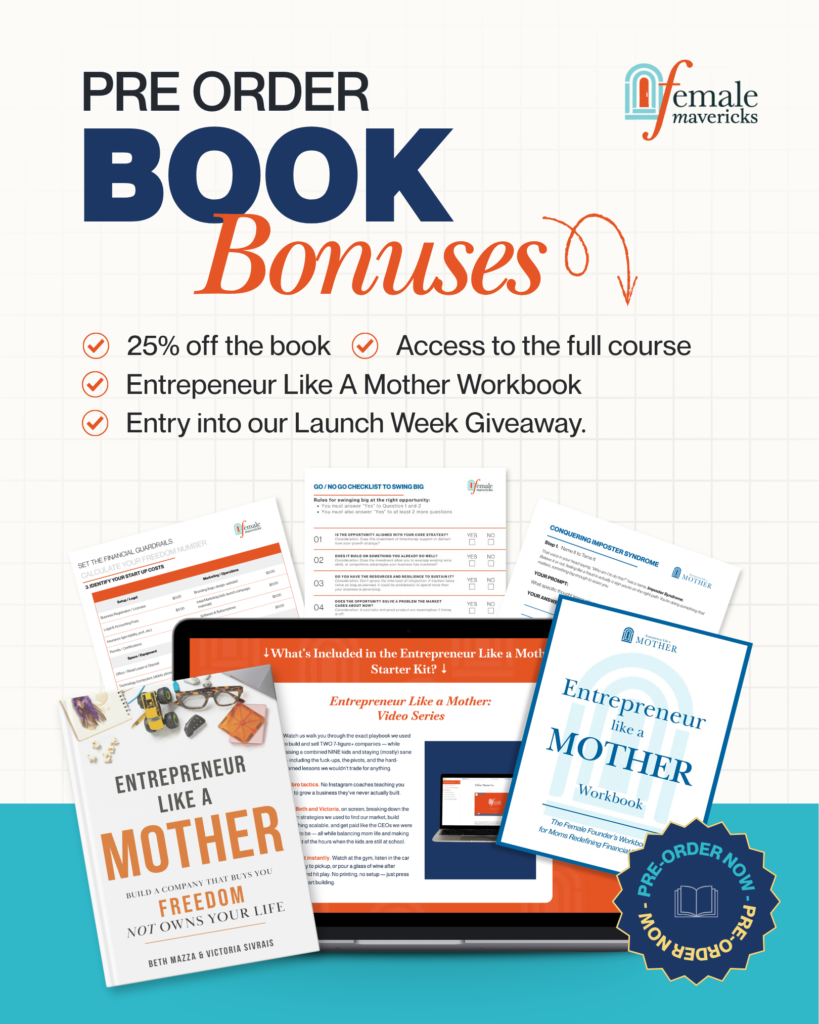
PS. Entrepreneur Like a MOTHER publishes September 22, three weeks from yesterday! Everything above is the meta version of what is inside it: the ugly first draft, the partner who makes it hit harder, the deadline you did not set for yourself. Pre-order now and claim the bonuses before they expire:
P.S. If someone you know is in a hard week right now, forward this to her. No pep talk attached. Just this.